
Celtic
The Celtic board decision that may have cost them Champions League spot despite stronger finish

Celtic may have improved their squad, but familiar boardroom mistakes remain
At the end of every transfer window, there is one straightforward question Celtic supporters should be asking: is the squad better than it was when the window opened?
For once, the answer appears to be a clear yes.
Celtic have made significant improvements to their squad during the 2026 summer window, even though they have also lost several important players.
Daizen Maeda, Reo Hatate and Arne Engels have all departed, while Kelechi Iheanacho and Marcelo Saracchi, who both played important roles during the title run-in, have also left despite wanting to remain in Glasgow.
The club has, however, invested heavily in replacing that quality.
Camilo Duran and Kasper Hogh have arrived as two strikers with Champions League experience, costing Celtic a combined £17 million. Egyptian World Cup player Haissem Hassan has also joined for a reported £9 million.
There have been additions in midfield too. Celtic paid around £6 million for German Under-21 international Mika Baur and another £3.4 million for highly rated Dutch midfielder Joel Van Der Berg. Oliver Sorensen has also arrived on loan from Parma, adding further depth and quality to the middle of the park.
The squad has been strengthened in other areas as well. Chelsea youngster Shumaira Mheuka and fellow academy prospect Landon Emenalo have joined on loan, while Jordan Lotomba has been brought in at right-back. Sam Johnstone’s arrival from Wolves on loan has finally addressed the goalkeeping position.
On paper, then, Celtic have every reason to feel positive about the finished squad.
But that does not completely erase the familiar problems that have repeatedly undermined the club’s recruitment strategy.
Once again, Celtic identified players who appeared attainable but failed to get deals over the line. Niko Sigur was reportedly keen on the move, while the Marcelo Saracchi situation became another frustrating saga in which the club ultimately failed to secure a player it had targeted.
Gvidas Gineitis is another obvious example. The Torino midfielder appeared to be within Celtic’s reach, but the club’s disastrous Champions League collapse against LASK appears to have effectively ended any possibility of bringing him to Glasgow.
That naturally raises an uncomfortable question: would things have been different if Celtic had signed Gineitis before the Champions League play-off?
The goalkeeper situation is another example of the club leaving an obvious need until the final stages of the window. Celtic knew they needed competition between the posts, yet it took until the final 48 hours before Johnstone eventually arrived.
These are not new issues. They have appeared repeatedly during previous transfer windows, and the quality of Celtic’s late business should not completely disguise them.
The club reportedly has around £100 million sitting in reserve, yet there remains an unwillingness to use those funds unless money is generated through outgoing transfers. That approach might be understandable if Champions League qualification was guaranteed for the Scottish champions.
It isn’t.
There was around £40 million in Champions League revenue at stake, and Celtic’s lack of options in defensive midfield was exposed when it mattered most. A player of Gineitis’ profile could potentially have addressed one of those weaknesses, but the opportunity was not taken.
Chris Sutton spent much of the summer warning that Celtic needed to complete their Champions League recruitment early. Following the collapse against LASK, his argument looks increasingly difficult to dismiss.
European qualification should have been the priority from the beginning of the window. The squad needed to be strengthened before the play-off games, not after the damage had already been done.
That is the frustrating part of Celtic’s summer.
The squad that exists today looks considerably stronger than the one that entered the transfer window. But when Celtic needed that strength most — during the disastrous night in Linz less than two weeks ago — the team was arguably not equipped well enough to protect a four-goal advantage.
It is easy to point the finger at the players who were on the pitch. Luke McCowan, Tony Ralston and Dane Murray all came in for criticism after the collapse, with McCowan in particular becoming a convenient target.
But the bigger issue is why those players were required to carry such responsibility in the first place.
Their presence in the starting team highlighted the lack of options available to Martin O’Neill on one of the biggest nights of the season. That cannot reasonably be placed on the manager or the individual players.
Ultimately, the responsibility lies with the people making the recruitment decisions.
Celtic may have finished the transfer window with a stronger squad and several impressive additions, but the failure to strengthen early enough for the Champions League qualifiers has once again proved costly.
The club’s decision-makers have repeatedly made the same mistake, and this time the consequences were potentially worth tens of millions of pounds — along with the prestige and opportunity that comes with competing in Europe’s premier competition.
-

 EFL2 months ago
Early Championship pressure for three managers as experts predict promotion and relegation
-

 Celtic1 month ago
McInnes reveals what sparked fiery touchline spat with Mark Fotheringham
-

 EFL5 months ago
Portsmouth competitors eye major double swoop amid Southampton’s £6m Bayern Munich move
-

 Rangers3 weeks ago
How Uefa Decision made Rangers Humiliation worse.
-

 EFL5 months ago
Flynn Downes statement on Tonda Eckert at Southampton triggers response in ‘Spygate’ row
-

 EFL5 months ago
Breaking news: Lawyer delivers verdict on potential Southampton punishment after hearing
-
 Rangers7 months ago
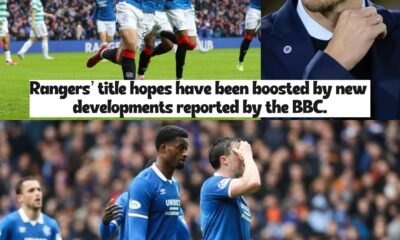
Rangers have been given a major lift in the Scottish Premiership title race after the latest BBC report
-

 EFL7 months ago
David Storch faces criticism for early decision at Sheffield Wednesday pre-takeover